
Consistency Over Perfection: What I Told 30 NYU Students About Building a Business
Most people think entrepreneurship starts with the right idea or the right opportunity.
After an hour with 30 undergraduate marketing students at NYU, I'm more convinced it's neither. What people are actually looking for is direction, real experiences, and honest guidance from someone who's lived it.
The setup
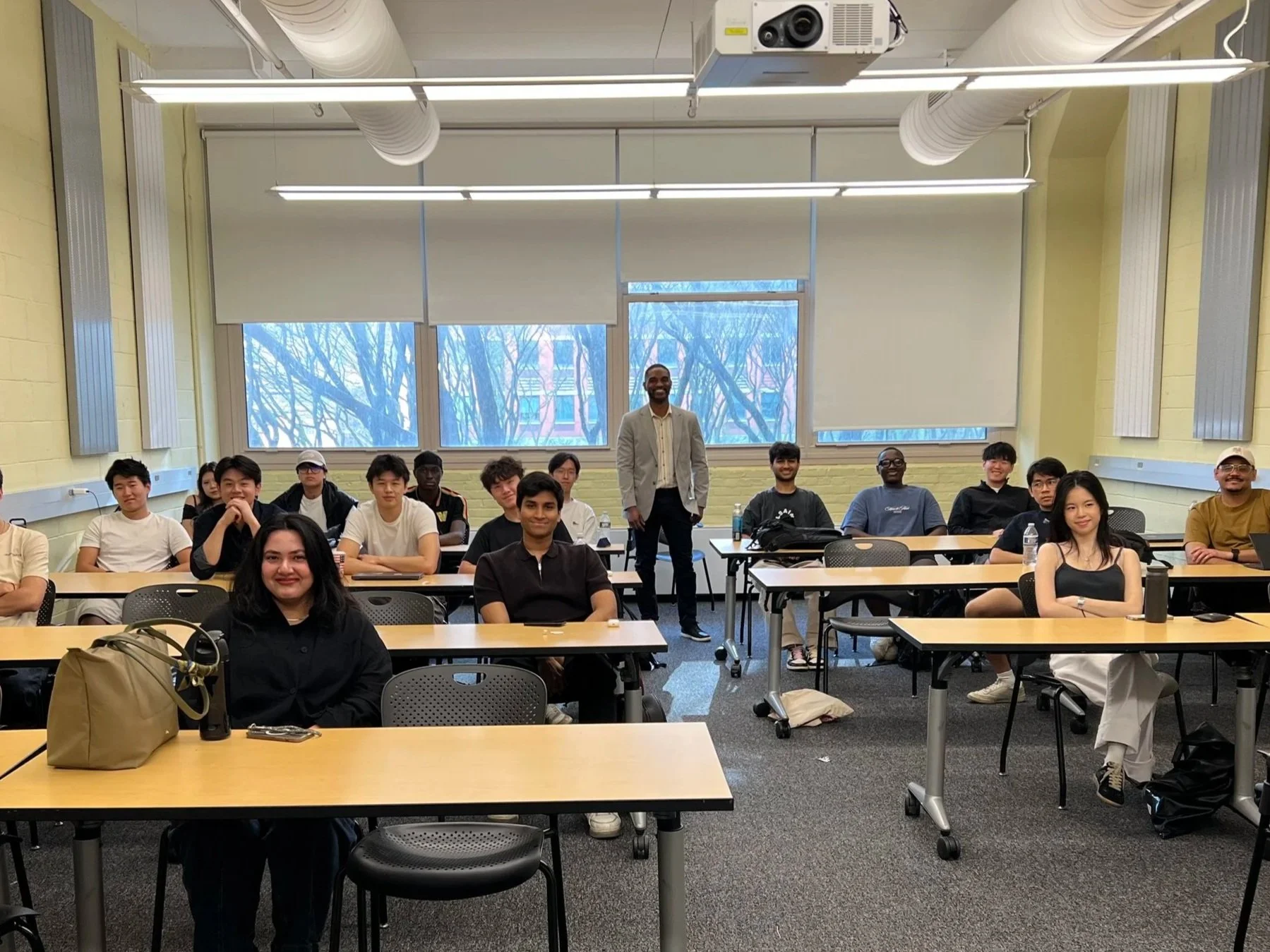
On April 15, I was invited by Professor Varise Cooper to speak to his undergraduate marketing class about my journey as an entrepreneur and the power of networking. I figured I'd tell a few stories, take some questions, and head out.
What I got instead was a room full of students asking thoughtful, specific questions about building a business, navigating uncertainty, and how Progress Playbook actually supports entrepreneurs. Most wanted to know what they should be doing right now.
That conversation reminded me of a few things every entrepreneur, early-stage or otherwise, needs to hear.
Consistency over perfection
You don't need a great day every day. You need a system that doesn't depend on your mood.
Sales. Content. Outreach. Each of these and more needs a system. The people who win are the ones who show up when they don't feel like it.
Think of it like fitness. Nobody gets in shape from one perfect workout. They get there by repeating workouts — some good days, some bad days, and some missed days — for two years. Build the system first. Motivation comes and goes.
Everything you need is inside your network
Everything you want from clients, partners, capital, and talent is already sitting inside someone else's contact list.
The mistake I see most often is people treating their network like a fire extinguisher. They only reach out when they need something. That's not how it works.
Build the relationships before you need them.
I think about my relationships in tiers:
Tier 1: High-touch. Close relationships, frequent real engagement.
Tier 2: Medium-touch. People you check in with regularly but not constantly.
Tier 3: Low-touch. Acquaintances worth a thoughtful note every so often.
The point isn't to score every person on a spreadsheet. It's to be intentional. Most people give every contact the same level of attention, which means everyone gets a thin version of you. That's how relationships go cold and how you miss the opportunities sitting right inside them.
Winning is in the practice
Professor Cooper made one thing clear when he introduced me: he runs his class around real projects. Not just lectures.
That stuck with me. Most of what I've learned in business came from doing something badly the first time, then doing it again. Reading a book about sales isn't selling. Watching a YouTube video about hiring isn't hiring.
If you're early, the fastest way to learn is to do it, even something small, see what works and what doesn't, then refine your approach from there.
Hire from your network. Then check for values.
When it's time to bring people on, start with referrals. Your network already understands what you care about and value, which means they'll send you people who fit.
But don't stop there. Run them through what actually matters to your work:
Do they align with your values?
Do they have a passion for your line of work?
Are they connected to your audience in any way?
A resume won't tell you all of that. A real conversation will.
Make the boring mistakes early
One of the most useful things I shared with the students was a lesson I paid for in cash: set aside your taxes from day one. Roughly 30%. Off the top.
This is the kind of mistake that feels small in month two and catastrophic in month fourteen. The earlier you get the unsexy stuff right, from taxes, contracts, and bookkeeping, the more freedom you have to take real risks later.
Community is the future
Here's the slightly bolder take I left them with.
As AI gets better and more of our work moves online, real human connection becomes more valuable, not less. Hyper-local communities. In-person experiences. Offline relationships.
The future isn't only digital. It's community driven.
If you're building something right now, take that seriously. The companies that will matter in ten years are the ones rooted in real places, with real people, doing real work together.
If you're early, do these things
Build systems and don't chase perfection.
Invest in your network on purpose, not when you're desperate.
Do real work. Create projects. Run experiments.
Make the boring financial mistakes early and then don't make them again.
Build relationships before you need them.
Prioritize community. Show up in person.
Why this work matters
Talking to those students reminded me of why Progress Playbook exists in the first place.
Entrepreneurs don't just need more information. They have plenty of that. What they need is structure, support, community, and real chances to practice.
That's the work. And it's better when we do it together.